Amiga 500
Gallery
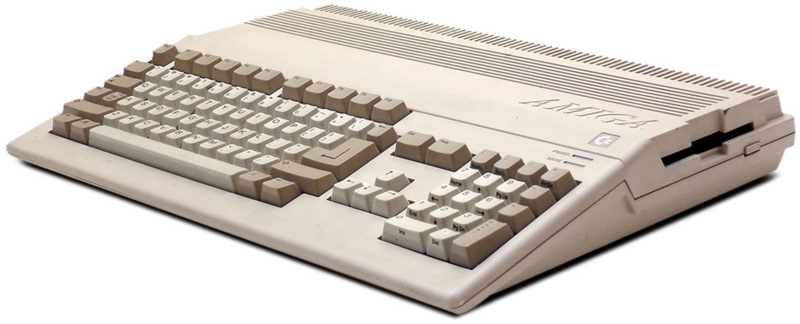
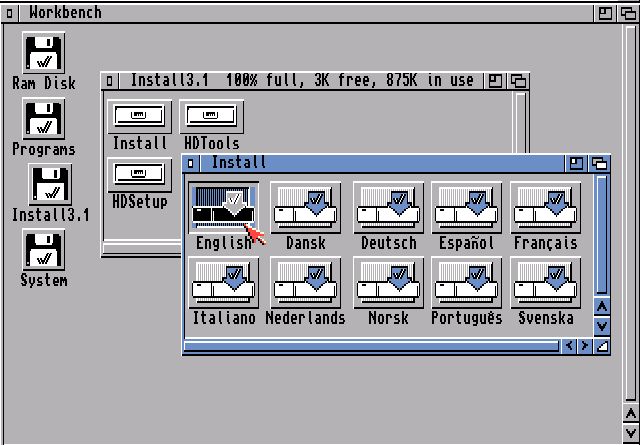
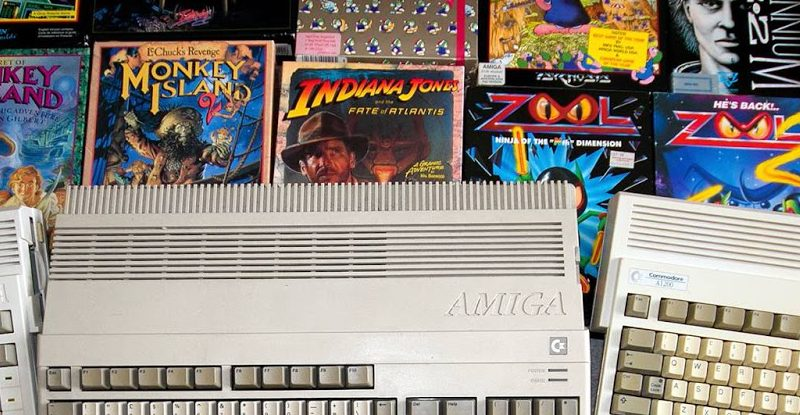
Amiga 500
“The Amiga was so far ahead of its time that almost nobody—including Commodore’s marketing department—could fully articulate what it was all about. Nine years later, vendors are still struggling to make systems that work like 1986 Amigas.” - Byte Magazine, 1994
The Amiga 500 (A500) was a groundbreaking 16/32-bit multimedia home computer released by Commodore in 1987. Often called the “best-selling Amiga model,” it brought professional-quality graphics, sound, and multitasking capabilities to consumers at an affordable price. The A500 became particularly popular for gaming, video production, and graphic design, establishing a passionate user base that continues to thrive today.
The Multimedia Revolution
Developed by the original Amiga Corporation (purchased by Commodore in 1984), the Amiga 500 was designed to be an affordable version of the high-end Amiga 1000. It packed revolutionary features into a single, integrated case:
Why the Amiga 500 Was Revolutionary
- Graphics: 4096-color palette, 32-64 on screen (up to 4096 in HAM mode)
- Sound: 4-channel 8-bit stereo sound (PCM quality with DMA)
- Multitasking: Preemptive multitasking OS (AmigaOS)
- Custom Chips: Dedicated coprocessors for graphics, sound, and I/O
- Expandability: Trapdoor expansion slot for RAM and accelerators
Technical Specifications
Technical Specifications
- CPU
- Motorola 68000 @ 7.16 MHz (NTSC) / 7.09 MHz (PAL)
- Memory
- 512 KB Chip RAM (upgradeable to 1MB), 512 KB ROM (Kickstart 1.2/1.3)
- Graphics
- OCS/ECS (Original/Chip Set) - 320×256 to 640×512, 12-bit color (4096 colors), 6-bit RGB output
- Sound
- Paula - 4 channels (2 stereo), 8-bit resolution, 28.9 kHz maximum sample rate
- Storage
- 3.5" DD floppy drive (880 KB), optional hard drive
- Ports
- RF, composite, RGB, 2× mouse/joystick, parallel, serial, floppy, audio, power
- Operating System
- AmigaOS 1.2/1.3 (Kickstart/Workbench)
The Amiga 500 Experience
For Gamers
- Arcade-Quality Games: Titles like “Shadow of the Beast” and “Lemmings”
- Superior Graphics: Smooth scrolling and parallax effects
- Digital Sound: Music and sound effects beyond 8-bit systems
- Two-Player Gaming: Built-in support for two controllers
For Creatives
- Deluxe Paint: Industry-standard pixel art software
- Video Toaster: Professional video production (with expansion)
- Music Trackers: OctaMED and ProTracker for music creation
- 3D Rendering: LightWave 3D and other 3D software
For Productivity
- Workbench: GUI operating system with true multitasking
- Word Processing: WordPerfect, Final Writer
- Desktop Publishing: PageStream, Professional Page
- Programming: AMOS, Blitz Basic, C compilers
The Amiga 500 Family
Revisions
- A500 (1987): Original model with 512KB RAM
- A500+ (1991): 1MB Chip RAM, ECS chipset, Kickstart 2.04
- A500B: Minor revision with updated motherboard
- A500CR (1992): Final revision with improved motherboard
Variants
- A500+: Enhanced version with ECS chipset
- A1000: Original Amiga (1985)
- A2000: High-end model with expansion slots
- A600: Compact, cost-reduced version
- A1200: 32-bit AGA chipset (1992)
Technical Deep Dive
Custom Chipset
- Agnus: Memory controller and blitter
- Denise: Video controller
- Paula: Audio and I/O controller
- Gary: Address decoding and glue logic
Graphics Modes
- Lores: 320×200/256 (NTSC/PAL), up to 32 colors
- Hires: 640×200/256, up to 16 colors
- SuperHires: 1280×200/256 (ECS), up to 4 colors
- HAM: Hold And Modify, 4096 colors on screen
Sound Capabilities
- 4 Channels: 2 for left speaker, 2 for right
- 8-bit Samples: 6-bit volume control per channel
- DMA Audio: For playing digital samples
- Paula: The sound chip that powered a generation of game music
The Amiga 500 Legacy
Commercial Success
- Sales: Over 6 million units sold
- Markets: Strong in Europe, especially UK and Germany
- Longevity: In production until 1992
Cultural Impact
- Demoscene: Birth of the demo scene
- Gaming: Redefined home gaming graphics
- Multimedia: Pioneered desktop video
- Music: Revolutionized computer music
Why It Declined
- Commodore’s Mismanagement: Poor marketing and strategy
- PC Clones: Rising dominance of IBM PC compatibles
- Console Competition: Sega Genesis and SNES
- Technical Stagnation: Slow to release next-gen models
Notable Software
Games
- Lemmings: Puzzle/platformer
- The Secret of Monkey Island: Adventure
- Speedball 2: Sports
- Shadow of the Beast: Action/Platformer
- Sensible Soccer: Sports
Creative
- Deluxe Paint: Graphics
- ProTracker: Music
- LightWave 3D: 3D modeling
- Video Toaster: Video production
Productivity
- Workbench: OS
- WordPerfect: Word processing
- AMOS: Programming
- OctaMED: Music
Technical Notes for Enthusiasts
Hardware Revisions
- Rev 3/5: Early models (1987)
- Rev 6A: Common revision
- Rev 8: A500+ with ECS
- Rev 8A1: Final revision
Common Issues
- Battery Leakage: On A500+
- Chip RAM: 512KB limit on early models
- Floppy Drive: Mechanical failures
- Keyboard: Membrane issues
Modern Upgrades
- Accelerators: 68020/68030/68060
- RAM Expansions: Up to 8MB Fast RAM
- Storage: CF/SD card adapters
- Video: RGB to HDMI converters
- Networking: Ethernet adapters
The Amiga 500 Today
Emulation
- WinUAE: Most accurate software emulator
- FS-UAE: Cross-platform emulator
- Amiga Forever: Commercial emulation package
- MiSTer: FPGA implementation
Collecting
- Price Range: $200-$1000+
- Sought-After Models: A500+, A500+
- Rarity: Boxed units command premium prices
Community
- Forums: Amiga.org, EAB
- Events: Amiga34, Amiga Ireland
- Development: New hardware and software
Did You Know?
- The Amiga 500 was used to create the “BABE” flying toaster animation in the After Dark screensaver
- MTV used Amigas for graphics in the late 1980s and early 1990s
- The Amiga was the first computer to feature a female voice in its introduction (the “Boing Ball” demo)
- NASA used Amigas to display real-time 3D graphics of the Space Shuttle’s launch trajectory
- The Amiga’s operating system inspired many features in modern operating systems, including Windows and macOS
The Amiga 500 in Popular Culture
- Featured in the movie “The Dead Pool” (1988)
- Used to create the special effects for “Babylon 5”
- Appeared in “Max Headroom” TV series
- Used by artist Andy Warhol to create digital art