Amiga CD32
Gallery
Amiga CD32
“The CD32 was the first 32-bit CD-ROM based game console, beating both the 3DO and PlayStation to market. It had the potential to be a major player in the console wars, but Commodore’s financial troubles and lack of third-party support ultimately doomed it.” - Dave Haynie, Commodore Engineer
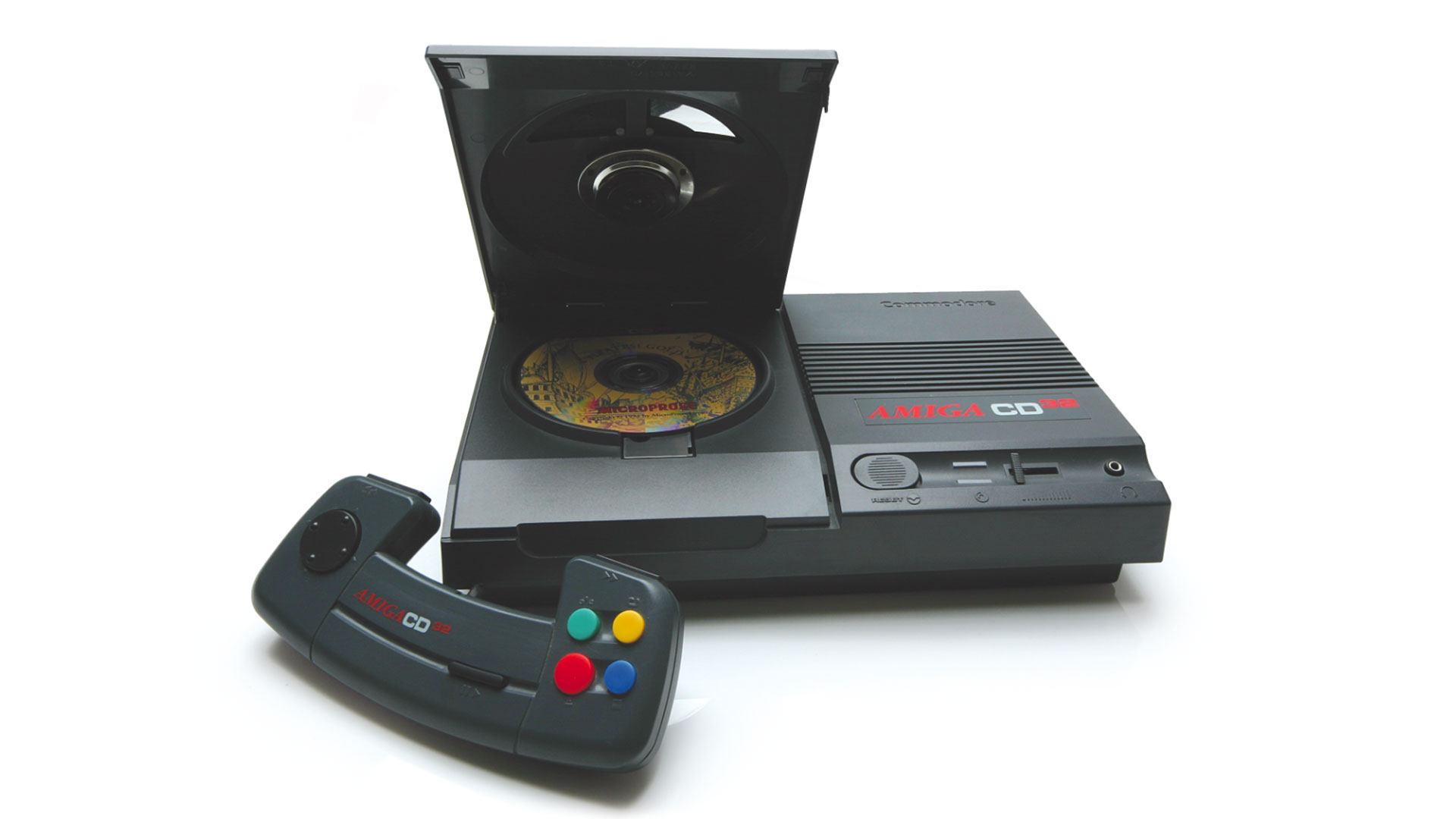
The Amiga CD32 was a 32-bit CD-ROM-based video game console developed by Commodore International and released in September 1993. As the first 32-bit game console to use CD-ROM as its primary storage medium, it represented Commodore’s attempt to compete in the emerging 32-bit console market against systems like the 3DO and Atari Jaguar. Based on the Amiga 1200 computer’s chipset, the CD32 offered superior graphics and sound compared to 16-bit consoles of the time.
The First 32-bit CD Console
Released in Europe first, the CD32 was Commodore’s final attempt to capture the home entertainment market. It combined the power of the AGA chipset with the storage capacity of CD-ROM, allowing for full-motion video, high-quality audio, and large, detailed game worlds.
Key Features
- 32-bit CPU: Motorola 68EC020 at 14.18 MHz (PAL) / 14.28 MHz (NTSC)
- CD-ROM: 2× speed drive with 320MB capacity
- Graphics: AGA chipset with 256,000 colors on screen
- Sound: 4-channel 8-bit stereo sound with CD-quality audio
- Expandable: Could be upgraded to a full Amiga 1200 with add-ons
Technical Specifications
Technical Specifications
- CPU
- Motorola 68EC020 @ 14.18 MHz (PAL) / 14.28 MHz (NTSC)
- Memory
- 2 MB Chip RAM, 1 MB ROM (Kickstart 3.1)
- Graphics
- AGA (Advanced Graphics Architecture) - 320×256 to 1280×512, 256,000 colors
- Sound
- Paula - 4 channels (2 stereo), 8-bit resolution, 28.9 kHz sample rate + CD-DA audio
- Storage
- 2× CD-ROM drive (320MB capacity), optional floppy drive
- Ports
- 2× controller, serial, parallel, RGB, composite, S-Video, audio, expansion
- Operating System
- AmigaOS 3.1 (Kickstart/Workbench with expansion)
Design and Features
Console Design
- Form Factor: Compact, curved design in dark gray
- Dimensions: 32 × 22 × 5 cm (12.6 × 8.7 × 2 in)
- Weight: 1.1 kg (2.4 lb)
- Power Supply: External power brick
Controller
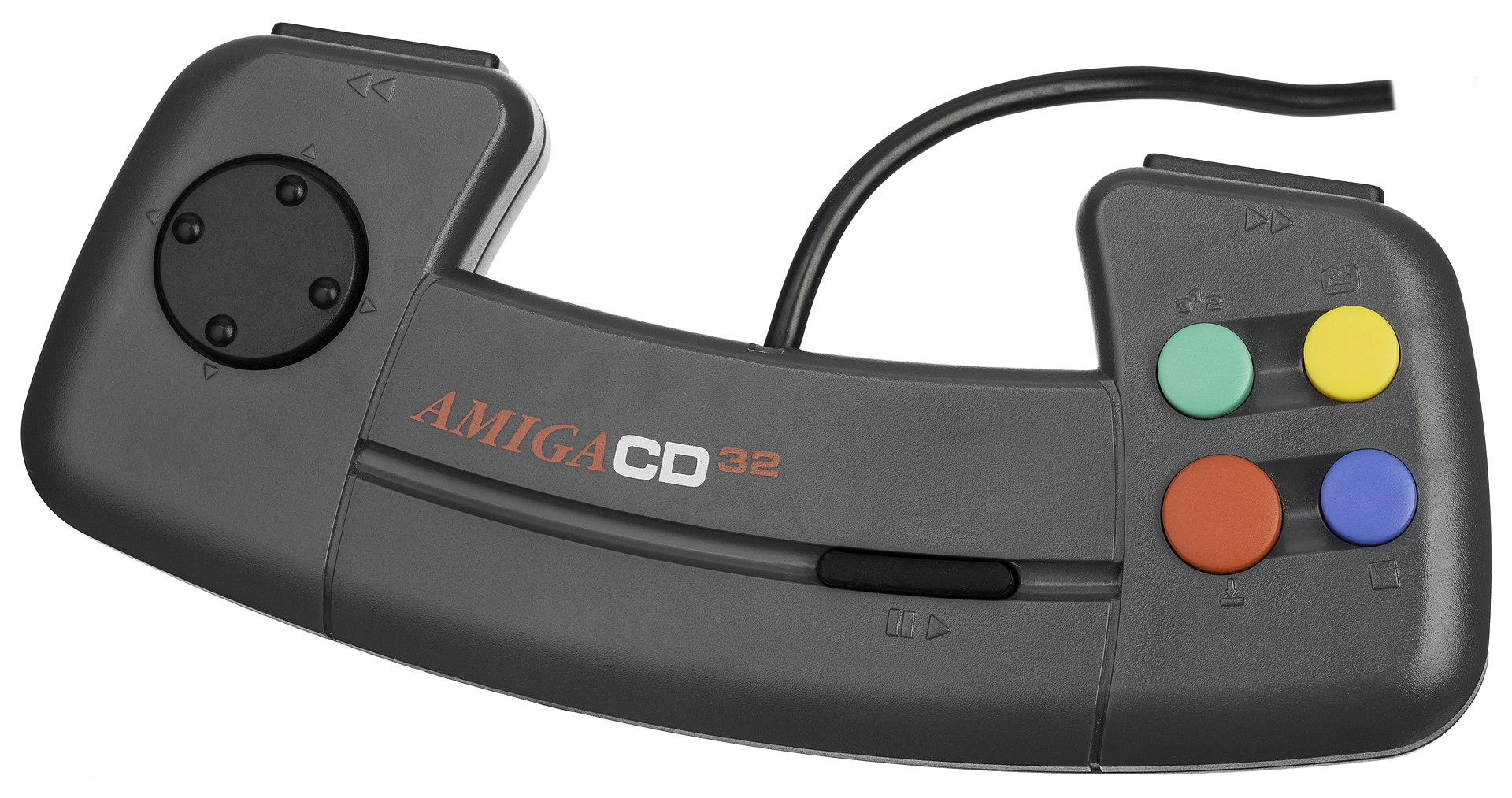
- Design: Ergonomic gamepad
- Buttons: 7 action buttons (A/B/R/L/Play/Forward/Back)
- D-pad: 8-way directional pad
- Numeric Keypad: For system functions and games
- Shoulder Buttons: L/R buttons for additional input
Media and Storage
- CD-ROM: 2× speed (300 KB/s)
- Memory Card: Optional save game storage
- Expansion: SX-1 and SX-32 expansions added floppy drive and hard drive support
The CD32 Experience
Gaming
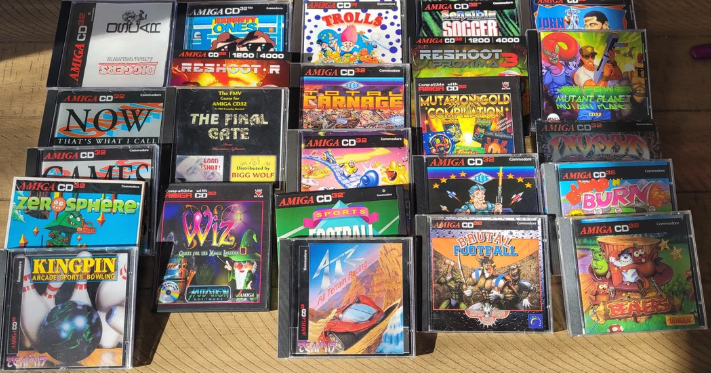
- Library: Over 175 official titles
- Genres: Action, adventure, racing, sports, and more
- Exclusives: Titles like “Guardian,” “Diggers,” and “Simon the Sorcerer”
- Ports: Enhanced versions of Amiga 1200 games
Multimedia
- CD-DA: Audio CD playback
- CD+G: CD+Graphics support
- Video CDs: With MPEG expansion
- Photo CDs: Kodak Photo CD compatible
Productivity (with Expansions)
- Workbench: Full Amiga OS with keyboard and mouse
- Applications: Word processing, graphics, and more
- Development: Software development possible
Technical Deep Dive
Hardware Architecture
- Motherboard: Custom design based on Amiga 1200
- Chipset: AGA (Advanced Graphics Architecture)
- Coprocessors:
- Agnus: Graphics and memory controller
- Denise: Video display
- Paula: Audio and I/O
- Akiko: Chips & Chips (C2P) conversion for 3D graphics
Graphics Capabilities
- Resolutions:
- 320×256 (PAL) / 320×200 (NTSC)
- 640×256 / 640×200
- 1280×256 / 1280×200 (interlaced)
- Color Depth:
- 8-bit (256 colors) in 320×256
- 4-bit (16 colors) in 640×256
- HAM-8 (262,144 colors) in 320×256
- Sprite Support: 8 sprites per line, up to 64 pixels wide
Audio Capabilities
- Paula Chip: 4 × 8-bit PCM channels
- Sample Rate: Up to 28.9 kHz
- Stereo Output: 2 × 2 channels (left/right)
- CD Audio: 44.1 kHz, 16-bit stereo
- Audio Output: Stereo RCA connectors
The CD32 Legacy
Commercial Performance
- Release: September 1993 (Europe), October 1994 (North America)
- Discontinuation: April 1994 (due to Commodore’s bankruptcy)
- Units Sold: Approximately 100,000
- Markets: Strongest in Europe, particularly UK and Germany
Why It Failed
- Timing: Released during Commodore’s financial collapse
- Competition: Faced established 16-bit consoles and upcoming 32/64-bit systems
- Marketing: Limited advertising and retail presence
- Game Library: Small compared to competitors
Collector’s Item
- Rarity: Becoming increasingly collectible
- Price Range: $200-$800 depending on condition and bundle
- Sought-After Items:
- Boxed systems
- Rare games
- SX-1 and SX-32 expansions
- Prototype hardware
Notable Games
Exclusive Titles
- Alien Breed Special Edition ‘92: Enhanced version with CD audio
- Diggers: Unique puzzle/strategy game
- Guardian: Impressive 3D shooter
- Simon the Sorcerer: Point-and-click adventure
- Super Stardust: Intense shooter with 3D elements
Enhanced Ports
- The Chaos Engine: CD audio and enhanced graphics
- Cannon Fodder: With new levels and CD audio
- Lemmings 2: The Tribes: Enhanced with CD audio
- Sensible Soccer: International Edition with new features
Multimedia Titles
- Xenon 2: Megablast Remix: Enhanced music and graphics
- Microcosm: FMV shooter
- Flame: Music visualization software
- Magic Ball: CD+G karaoke software
Technical Notes for Enthusiasts
Common Issues
- Laser Failure: CD drive may need cleaning or replacement
- Power Supply: Original PSUs can fail
- Capacitors: May need replacement due to age
- Controller Ports: Can become loose over time
Modern Upgrades
- TF328: CompactFlash and 8MB Fast RAM
- TF360: 68030 CPU upgrade
- RGB to HDMI: Modern video output
- PS/2 Adapter: For keyboard and mouse
- Wireless Controllers: Modern gamepad support
The CD32 Today
Emulation
- WinUAE: Most accurate emulation
- FS-UAE: Cross-platform emulator
- Amiga Forever: Commercial emulation package
- MiSTer: FPGA implementation
Homebrew Scene
- New Games: Still being developed
- Ports: Classic games being ported
- Demos: Showcasing the hardware
- Tools: Development tools and documentation
Community
- Forums: Amiga.org, English Amiga Board
- Events: Amiga shows and meetups
- Preservation: Efforts to archive software
Did You Know?
- The CD32 was originally going to be called the “Amiga 32”
- A planned floppy disk add-on would have made it a full Amiga computer
- The CD32’s Akiko chip was designed to help with 3D graphics
- Some CD32s were converted into arcade machines
- The CD32 was used in some educational and kiosk applications
The CD32 in Popular Culture
- Featured in the movie “Hackers” (1995)
- Appeared in the TV show “The IT Crowd”
- Mentioned in the book “Commodore: A Company on the Edge”
- The subject of numerous YouTube retrospectives